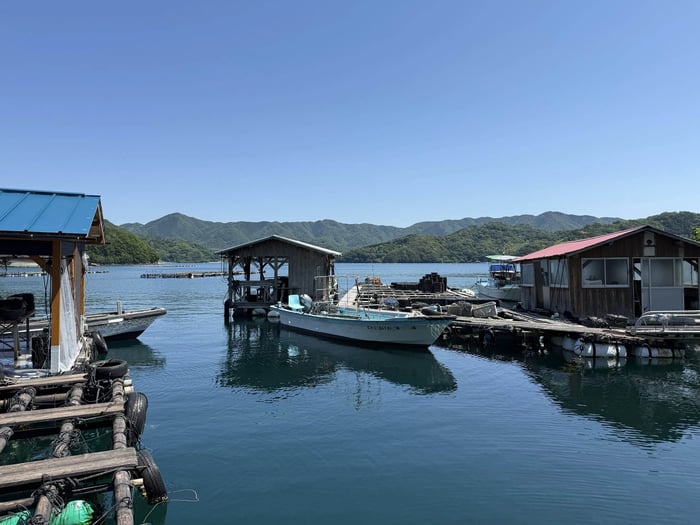
Oyster panel nets are mesh containers that hold oysters on saltwater pearl farms. Suspended from long lines in the seawater, individual oysters or even small groups of oysters live and grow in these nets.
They are a fundamental tool that is used extensively on saltwater farms and help pearl farmers manage oysters throughout the cultivation process.
There are many different types of panel nets. The most common are the flat panel nets with individual pockets for each oyster. Others may look like pyramid-shaped or cylindrical baskets that tie at the top, housing small clusters of juvenile oysters.
In addition, different panel nets serve different functions. For instance, there are special panel nets that are used post-grafting, when the oysters are recovering from their bead-nucleation procedure.
The main function of these panel nets is to protect the oysters from predators in the ocean, while still allowing them to have unhindered access to nutrient-rich seawater. Predators that attack oysters may include various types of fish, as well as oysters and even octopuses. Within their individual pockets, the oysters remain safe, which helps them and stay healthy and grow high quality cultured pearls.
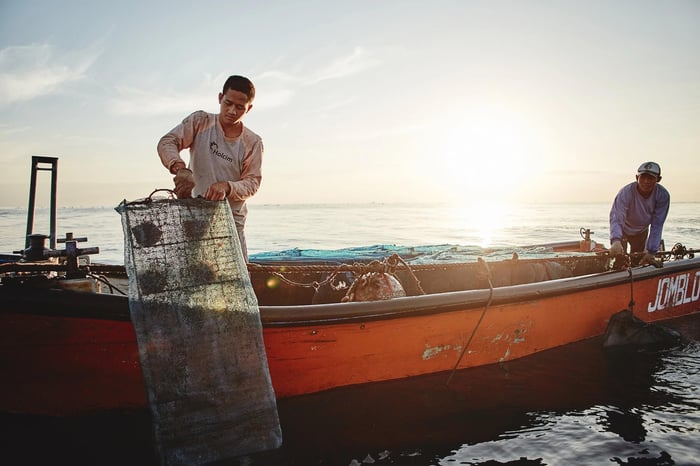
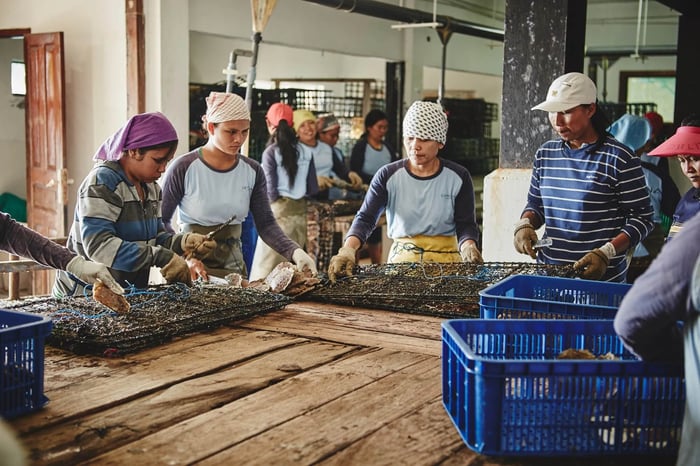
The nets are removed from the long-lines and taken to the cleaning shed every few months. Once removed from their nets, any algae, barnacles and other sea animals growing on their outer shells are carefully removed. Once cleaned, they are replaced in the panel nets and once again suspended from the longlines.
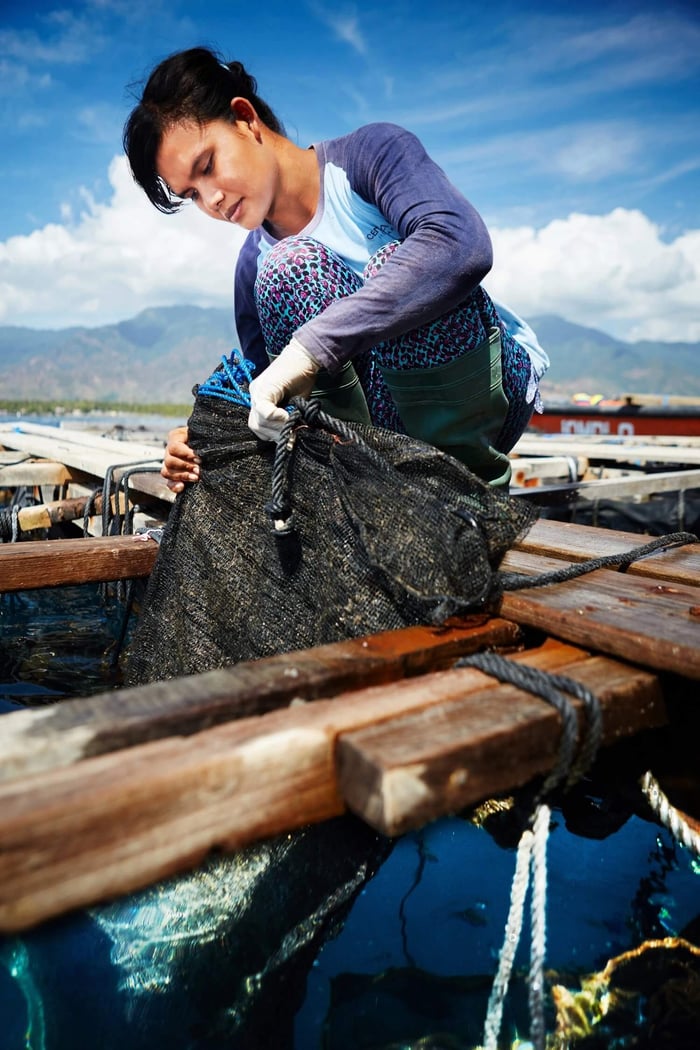
On saltwater farms, panel nets are rotated regularly to ensure the health of the oysters.
Farm workers travel by boat to the longlines suspending the panel nets. They dive into the water and carefully turn the nets 180 degrees. This also allows the farm workers to inspect the oysters and take action if an oyster appears unhealthy.
This regular handling is critical, as it promotes even nacre deposition and improves the overall quality and symmetry of the pearls.
Panel nets play an important role in protecting oysters throughout the pearl farming process because they protect the oysters, and help ensure their healthy growth which in turn leads to the production of high-quality cultured pearls.