As part of our pearl tour with the Japan Pearl Exporters’ Association (JPEA) earlier this month, we attended the 7th Japan Pearl Fair which took place in Kobe from 10th to 12th November. Being a pearl enthusiast, I was thrilled to have been given this opportunity to understand the latest developments in the cultured pearl industry. What’s more, I was looking forward to connecting with renowned Japanese pearl wholesalers and suppliers and meeting pearl buyers from all over the world.
Kobe has long been the hub of the global pearl trade and therefore proved to be the perfect city to host a B2B event focused entirely on cultured saltwater, with some exhibitors showcasing finished jewelry and even natural pearls.
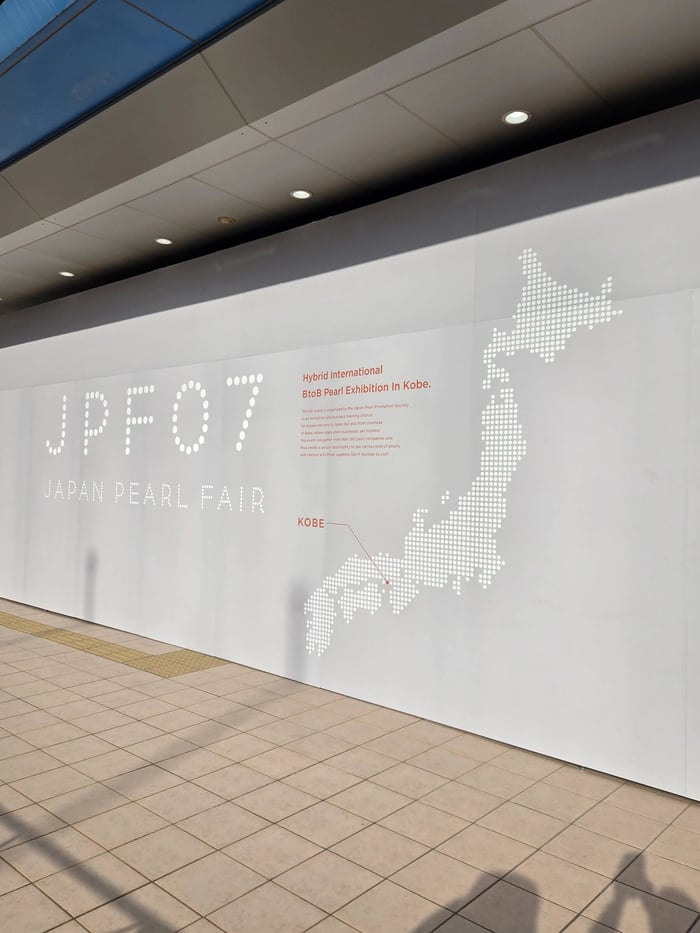
Stepping into Kobe International Exhibition Hall No. 3, I was struck by the variety and quality of the pearls that were on offer. But fore we could start visiting the booths, we attended the ribbon cutting and opening ceremony of the show.
Soon, all the KOLs were being introduced to prominent members of the JPEA at their booths. All of us were introduced to Mr. George Kakuda, President of JPEA and CEO of Kakuda Pearls. Similarly, we were taken to several other booths of leading pearl wholesalers, each exhibiting pearls of superb quality.
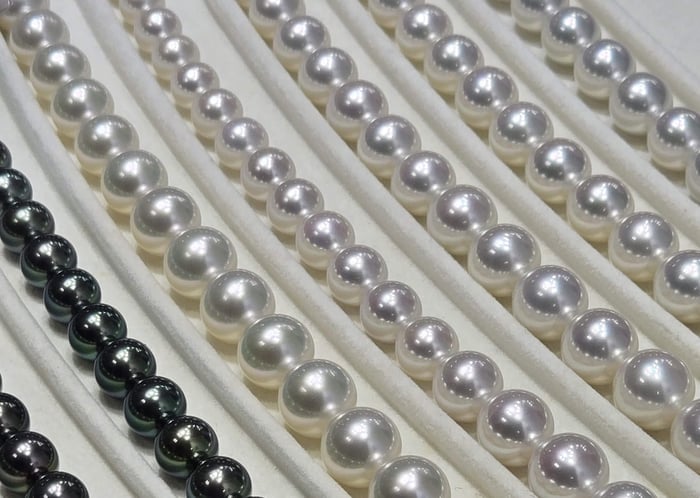
It would not be an overstatement to say that the quality and variety of pearls on display was truly impressive. The exhibitors presented an extensive selection of Akoya, South Sea, and Tahitian pearls, both as loose pearls and strands and as finished jewelry pieces.
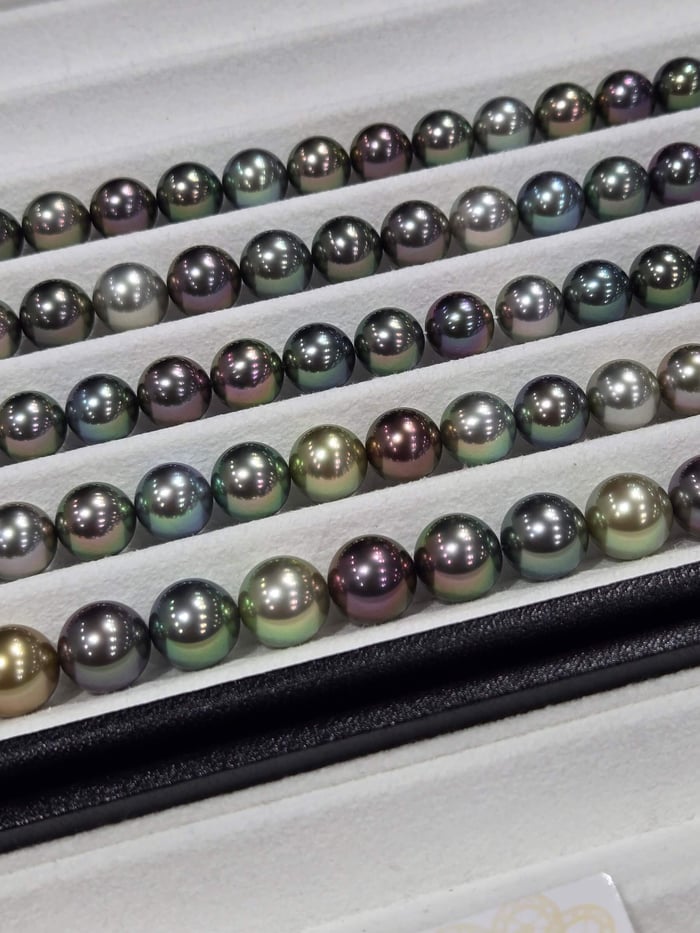
I was completely captivated by the Japanese akoya pearls. While the luminous white strands did catch my eye, I found my gravitating towards the aptly named Rosé akoyas, white pearls with delicate pink overtones, which truly lived up to their reputation as the crème de la crème of cultured akoya pearls.
At the same time, blue Akoya pearls and mixed-color necklaces drew considerable attention, not just of the buyers but of the KOLs too, demonstrating the fact that consumers sometimes cannot resist the allure of the unique and the unusual!
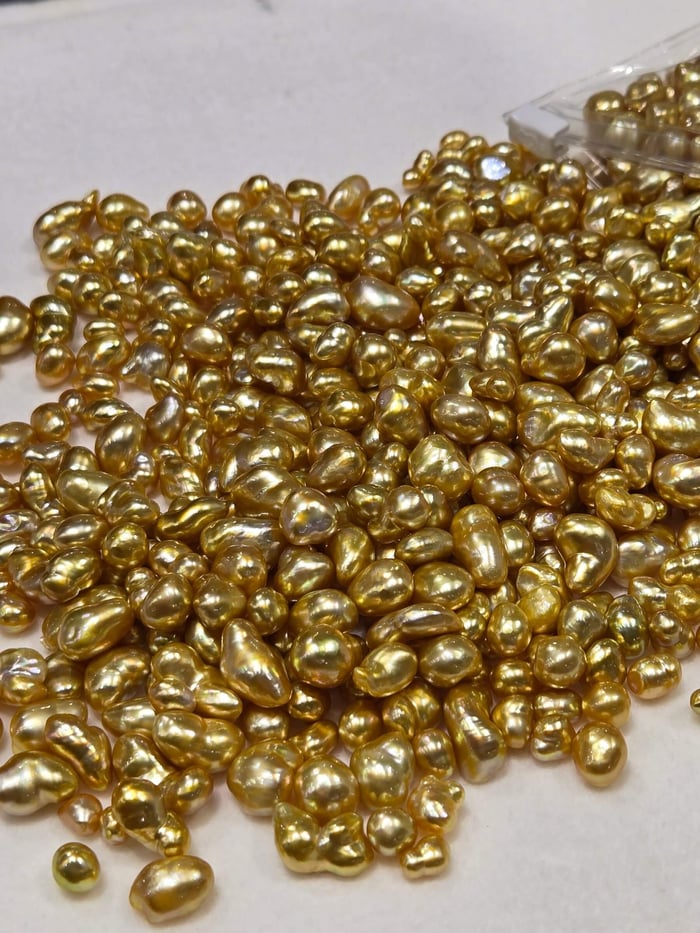
South Sea pearls were just as captivating. Loose golden keshi South Sea pearls, which looked more like tiny nuggets of gold than pearls, white and gold mixed-color baroque strands and gleaming white South Sea pearl pairs, showcased the natural beauty and versatility of these exceptional pearls. In addition, Tahitian keshi and organically shaped baroque pearls were niche pieces that attracted discerning buyers looking for something truly special.
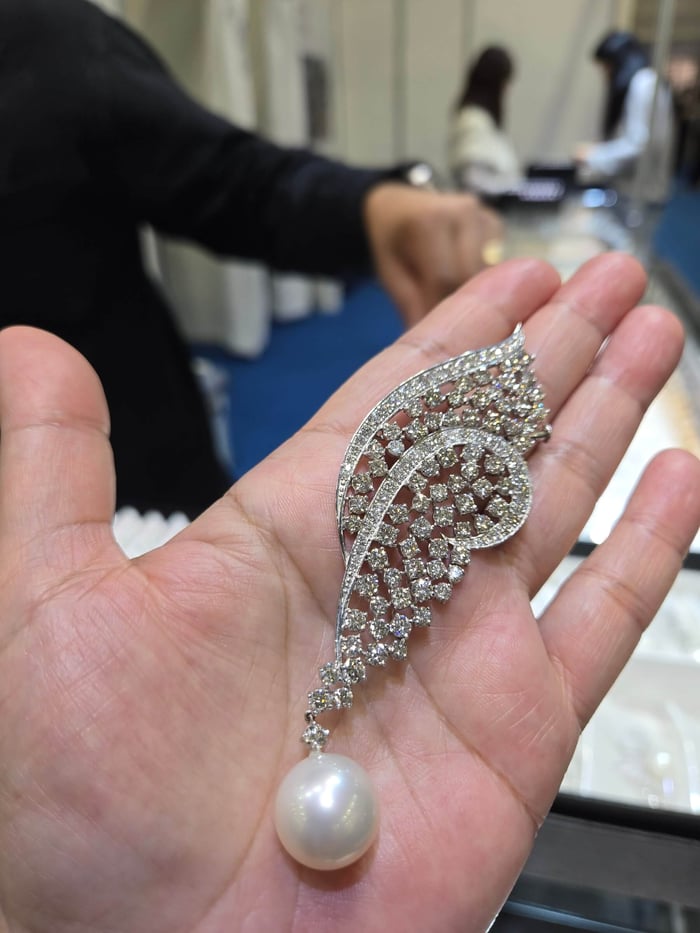
The one thing I noticed among all the exhibitors showcasing fine jewelry was the exceptional finish of the pieces. I picked up several brooches and earrings and examined them closely from front and back – both sides were just as finely finished, a true hallmark Tahitian keshi and organically shaped baroque pearls were niche pieces that attracted discerning buyers looking for something truly special.
Beyond the exhibition floor, the fair’s seminar program offered incredible insights into the industry. Several of the KOLs, including myself, attended the expert-led talks covering trends in Japan’s pearl industry, which gave us valuable insight into upcoming trends in the global pearl market.
However, the hands-on Pearl Proficiency mini course, was a very memorable highlight of the show. During this hour-long session, we, as participants, were asked to examine different types of saltwater pearls as the instructor elaborated on the pearls’ different features. I came out of the course with a much greater understanding of the factors that underpin pearl quality and prices.
The last seminar was led by the KOLs, where each of us shared our insights about the beauty of akoya pearls and where they fit in the fast-evolving world of the global jewelry industry.
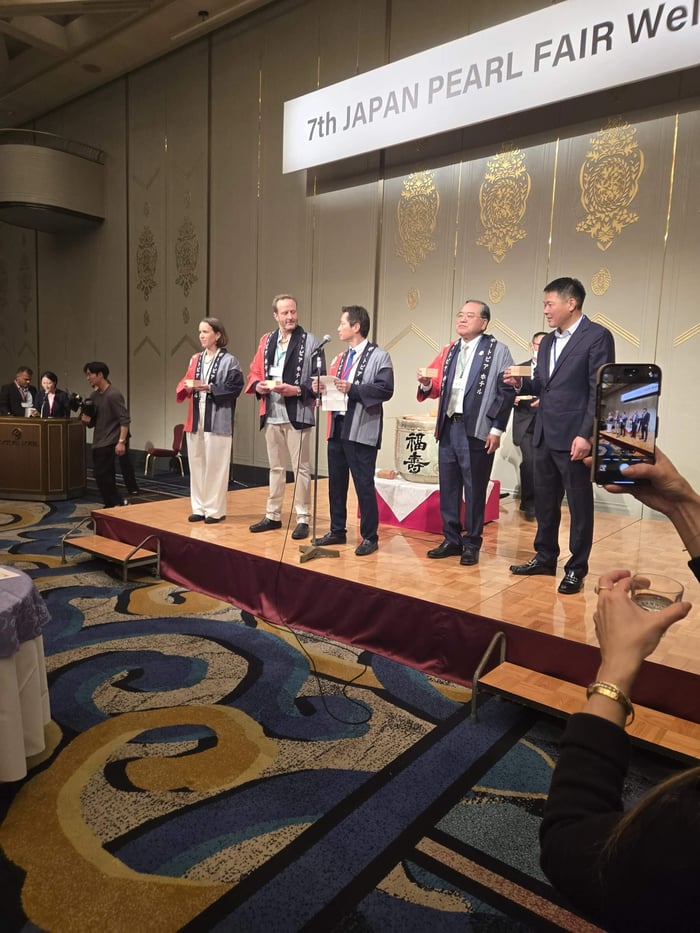
The fair also included a by-invitation welcome party, which offered a more relaxed setting for networking. The evening began with a traditional Japanese sake ceremony, followed by a lavish buffet featuring both Japanese and international dishes. It was a wonderful way to witness the community spirit of the Japanese pearl industry within the backdrop of the country’s rich cultural heritage.
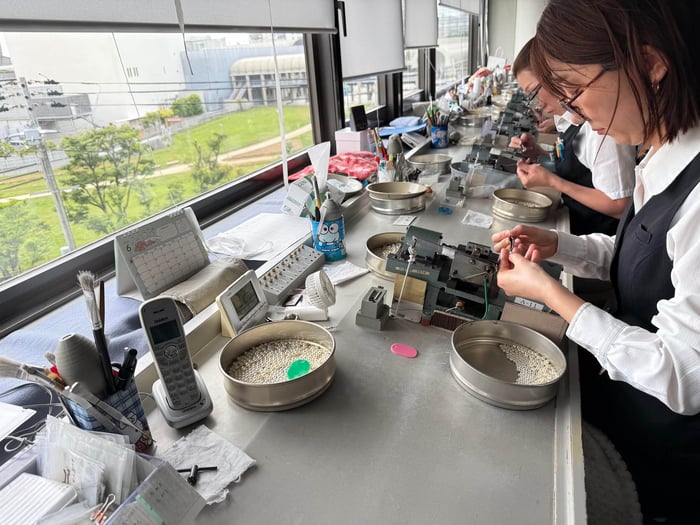
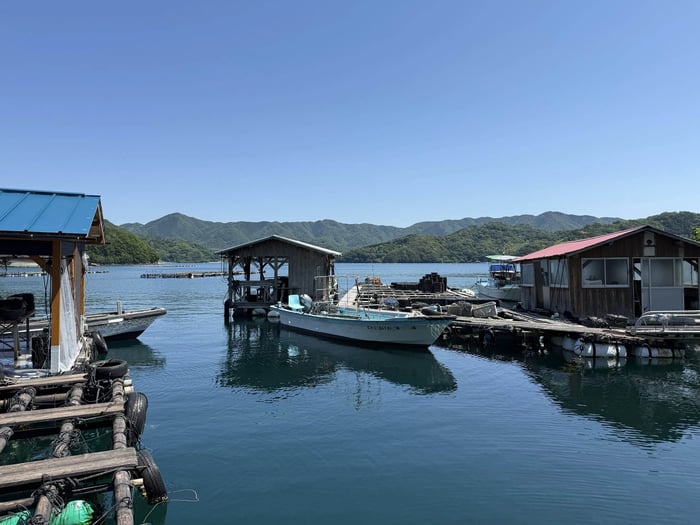
The 7th Japan Pearl Fair in Kobe was the last destination on our tour itinerary, and the three days of the show went by in the blink of an eye. However, the show also represented an important stop in the journey of a cultured akoya pearl - from being grown and harvested on a farm to being processed through sorting and drilling, to being offered for sale, to the global market, at a B2B event. The synchronicity in our journey in Japan and the akoya pearl’s journey from farm to market, while wholly planned, had an interesting poetry to it.
Personally, I left Kobe inspired—not just by the beauty of the pearls themselves, but by the connections, conversations, and shared passion for this beautiful gem!