
Pearl education · Pearls As One
South Sea Pearls: Size, Nacre, and Natural Color
White, silver, and golden South Sea pearls share a remarkable mollusk. Understanding its biology helps explain their scale, appearance, and demanding cultivation.
4-minute read
- Environment
- Tropical saltwater
- Mollusk
- Pinctada maxima, the silver-lipped or gold-lipped pearl oyster
- Major sources
- Australia, the Philippines, and Indonesia
- Typical scale
- Often about 10–16 millimeters; the full range extends beyond this
What South Sea means
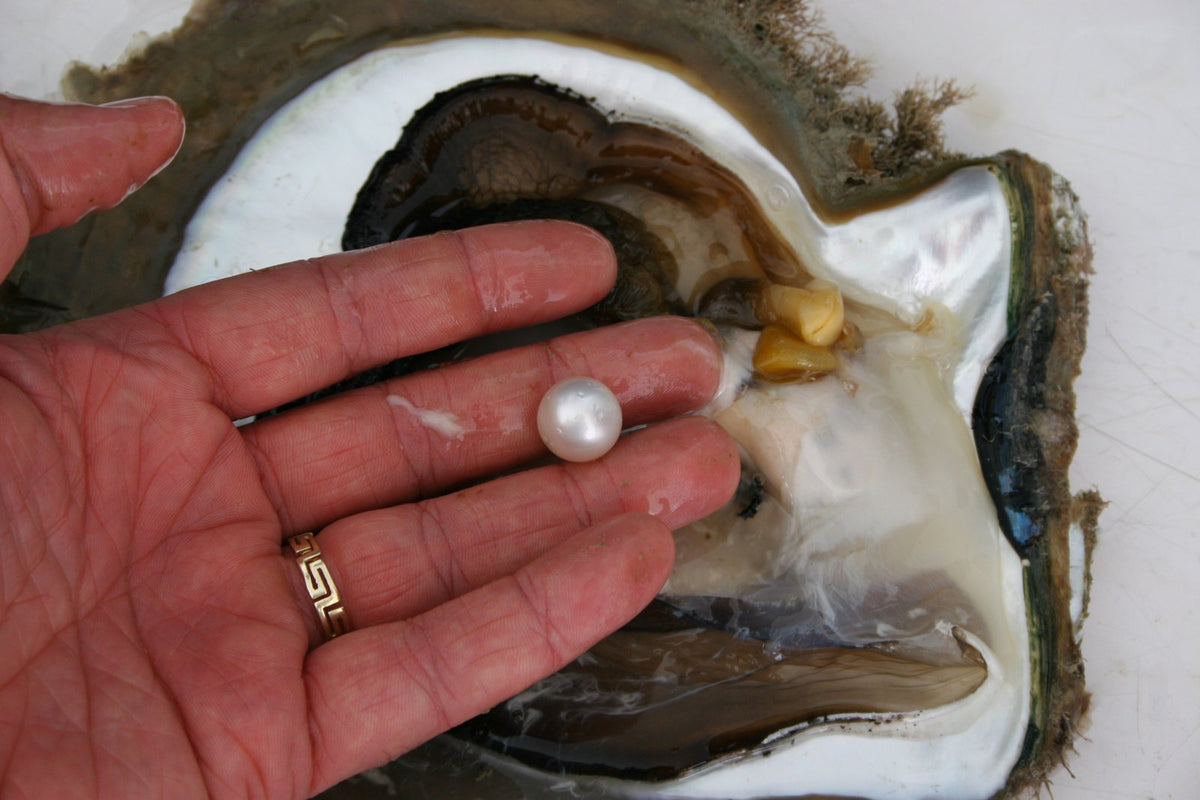
South Sea cultured pearls are produced in Pinctada maxima. Silver-lipped and gold-lipped refer to the coloring of the shell's inner margin, not two unrelated pearl categories. The mollusk's large size and biology help make substantial pearls possible, although a large host does not guarantee a large, fine pearl.
Australia is especially associated with white and silver South Sea pearls. The Philippines is renowned for golden pearls, and Indonesia produces both white and golden material. These are broad associations rather than a map for identifying an unknown pearl by color. Several regions can produce similar appearances, and provenance requires documentation beyond visual resemblance.
Further reading: GIA: Different Pearl Types Explained
An industry built on shell and skill
Before cultured pearls became the focus, Pinctada maxima shell was collected for mother-of-pearl used in buttons and decorative work. Pearl farming later combined access to suitable mollusks and marine environments with the grafting expertise developed in Japan. The establishment of Kuri Bay in Western Australia in 1956 was an important step in commercial South Sea cultivation.
The industry expanded across the Indo-Pacific, with different regions developing distinctive approaches to shell supply, hatcheries, and farming. This background helps explain why a South Sea pearl represents more than the time spent growing its nacre. A farm must first obtain and raise a healthy mollusk capable of carrying the pearl through its cultivation cycle.
The long work of cultivation
A technician typically places a shell bead and donor mantle tissue into the host mollusk. Cells from the tissue form a pearl sac around the bead and deposit nacre. Many South Sea farming cycles concentrate on one bead-cultured pearl in each operated mollusk, with subsequent cultivation possible in suitable healthy animals.
The shells live in baskets, panels, or other systems suspended in marine waters. Farmers manage spacing and depth, remove organisms that foul the shells and equipment, and watch for changes in water conditions. Grow-out commonly extends over years. Storms, disease, temperature shifts, and other stress can disrupt the process or reduce the quality of the harvest.
Long cultivation is not a quality certificate. Some pearls emerge with fine luster and clean surfaces; others are irregular, heavily marked, or unsuitable for jewelry. The variability helps explain the difficulty of assembling a closely matched pair or a full strand.

White, champagne, and gold
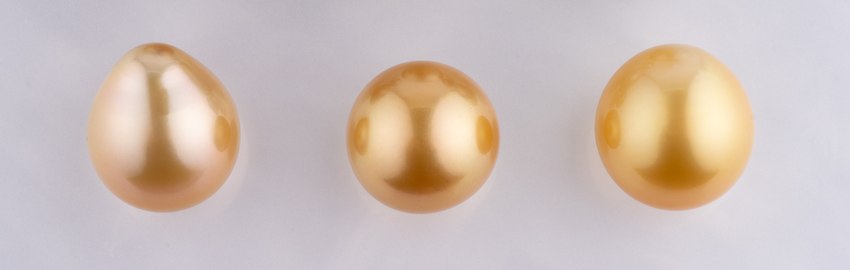
Silver-lipped production is associated with white, silver, and cream bodycolors. Gold-lipped production can range from pale champagne to rich gold. These colors can occur naturally, reflecting the mollusk and the donor tissue involved in nacre formation. A golden pearl does not need dye to exist.
That biological fact is different from saying every golden pearl on the market is untreated. Color-altered pearls also exist. A meaningful description separates pearl type, bodycolor, overtone, and treatment information. Country of origin cannot be reliably assigned just by choosing the country most commonly associated with a color.
Luster and nacre: look for life, not size alone
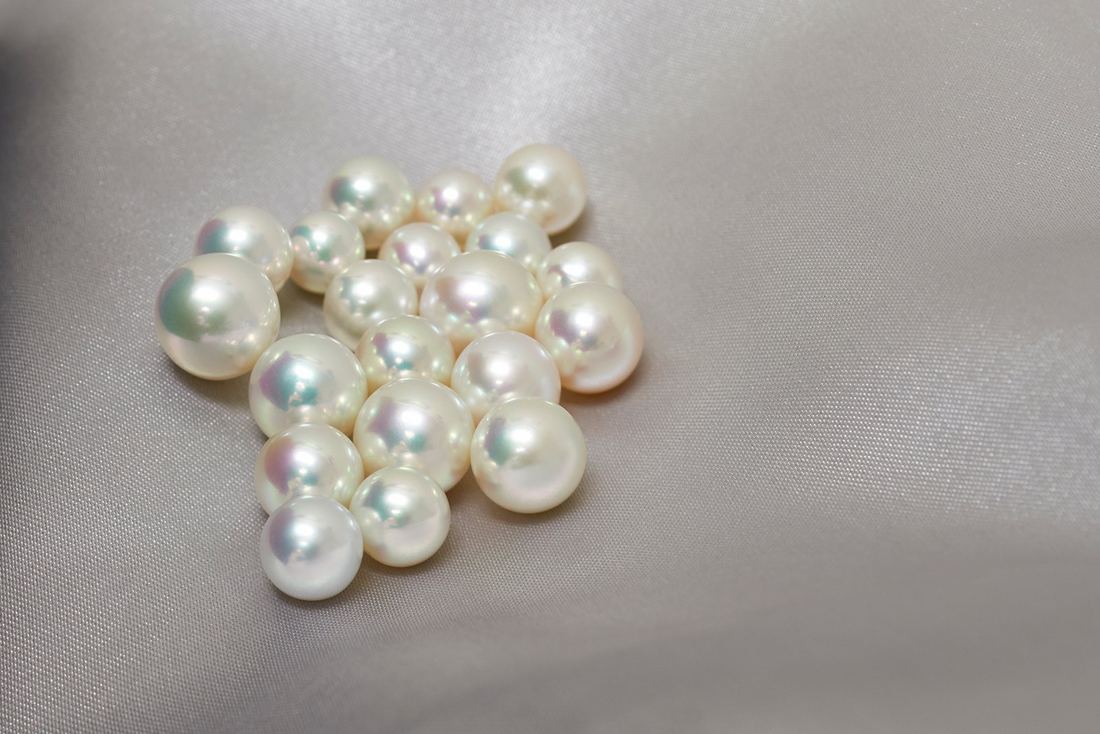
Fine South Sea pearls often have a luminous, satiny character. The reflected light may look different from the very sharp reflections associated with fine akoya, but softer in character should not mean lifeless or chalky. Turn the pearl and examine the continuity of its glow and the definition of its reflections.
South Sea pearls are known for substantial nacre, yet thickness alone does not explain beauty or durability. Nacre needs to be sound and well formed. Cracks, exposed nucleus, conspicuous damage, or dull areas call for closer examination. Surface markings should be judged by their visibility and severity, not simply counted without context.
Many pearls fall around 10–16 millimeters; smaller and larger examples occur. An increase in diameter changes visual scale considerably, but size should be considered alongside shape, luster, color, and surface. A large pearl with weak overall quality is not automatically the more desirable example.
Beyond the round strand
Drops, ovals, buttons, circles, and sculptural baroques are genuine South Sea forms. Keshi cultured pearls are non-bead pearls associated with the cultivation process, often formed when a bead is not retained. They should not be sold as natural pearls simply because there is no bead inside.
Mabé is different again: a finished assembled product made from a cultured blister grown against the shell, typically with filling and a backing after harvest. It can provide a broad luminous surface in jewelry, but it is not a whole round pearl. A clear description should make that construction understandable.
For any South Sea jewel, ask what supports the type and origin claims, which treatments are known, and how a stated grade is defined. In a strand, examine whether the pearls agree in luster and color as well as in size. Matching is a skilled achievement rather than an automatic consequence of sharing one pearl name.
Bring it together
Key takeaways
- South Sea pearls come from Pinctada maxima; their name is not a size grade.
- White and gold can be natural colors, but appearance does not settle treatment history or geographic origin.
- Large size, sound nacre, luster, surface, and matching must be considered together.
Go deeper with Pearls As One.
This public resource introduces the principles. The full course explores the biology, history, cultivation and evaluation of pearls in greater depth.